
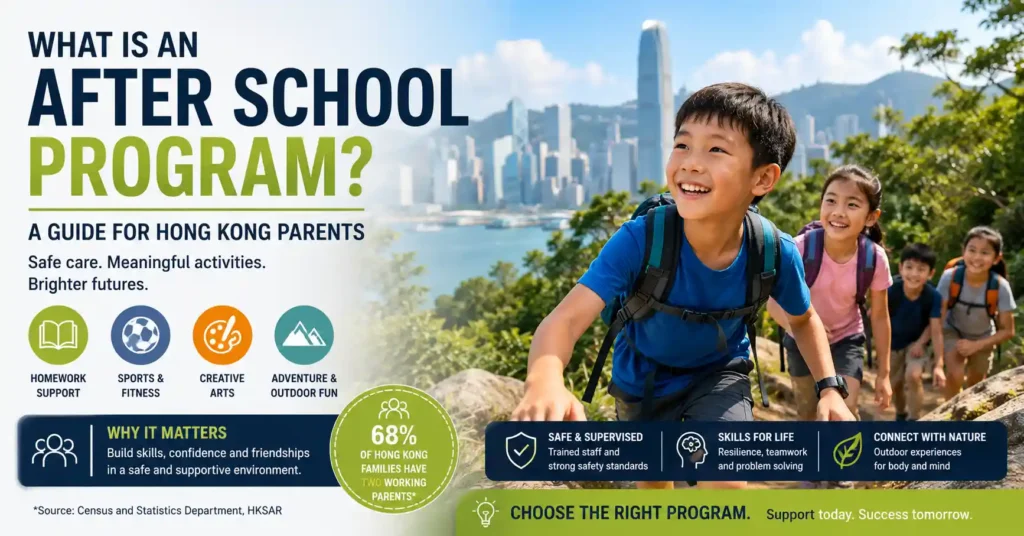
An after school program provides supervised care and structured activities for children between school dismissal and when parents finish work. In Hong Kong, where 68% of families have two working parents according to government census data, these programs fill a critical gap. They offer everything from homework help to sports for kids, giving children safe environments to learn and play.
This guide explains what after school programs offer, why they matter in Hong Kong’s fast-paced environment, and how to pick the right one for your child. You’ll learn about different program types and discover why outdoor activities matter for child development.
Why Do Hong Kong Families Need After School Programs?
After school programs solve the supervision gap that exists when school ends at 3 PM but parents work until 6 PM or later, while providing educational enrichment and social development opportunities.
Hong Kong’s work culture creates real challenges. Most offices don’t close until evening. Grandparents often still work themselves. Domestic helpers may have other duties. After school programs step in as reliable, structured solutions.
These programs do more than just watch kids. They prevent the “latchkey child” situation where children spend hours alone at home. Research from Hong Kong University shows unsupervised children face higher risks of screen addiction and social isolation.
Beyond safety, quality programs boost academic performance. Children get homework support from trained staff. They develop time management skills. They learn to balance work and play in structured settings.
The social benefits matter too. Kids build friendships outside their immediate classroom. They learn teamwork through group activities. They gain confidence by trying new things in supportive environments.
What Types of After School Activities Are Available?
Hong Kong offers four main types of after school programs: academic enrichment, sports and physical activities, creative arts, and adventure-based outdoor programs.
Academic programs focus on tutoring and test preparation. They’re popular in Hong Kong but shouldn’t dominate a child’s entire afternoon. Balance matters for healthy development.
Sports programs range from traditional options like swimming and football to specialized training in martial arts or gymnastics for kids hong kong. Physical activity helps children release energy and build coordination.
Creative programs include art classes, music lessons, and drama workshops. These develop different thinking skills and give academic-focused children important creative outlets.
Adventure programs combine outdoor exploration with skill-building. Programs like forest school hong kong teach children about nature while developing resilience and problem-solving abilities through hands-on experiences.
Comparison of After School Program Types
| Program Type | Primary Focus | Key Benefits | Best For |
| Academic | Homework & tutoring | Better grades, study skills | Children needing extra support |
| Sports | Physical fitness | Health, teamwork, discipline | Active children |
| Creative Arts | Expression & creativity | Confidence, emotional skills | Artistic children |
| Adventure Sports | Outdoor challenges | Resilience, nature connection | All children |
How Do Adventure Sports Benefit Children?
Adventure sports build physical fitness, mental resilience, problem-solving skills, and confidence through challenging outdoor activities that push children beyond their comfort zones safely.
Hong Kong children spend too much time indoors. The average child gets less than 60 minutes of outdoor time daily, according to Hong Kong Department of Health statistics. Adventure programs change that pattern.
Rock climbing teaches children to assess risks and plan moves carefully. They learn that failure is part of learning. Each successful climb builds genuine confidence based on real achievement.
Hiking and trail activities connect kids with nature. They observe weather patterns, identify plants, and navigate terrain. These experiences create environmental awareness that classroom lessons alone can’t match.
Team challenges develop cooperation skills. Children learn to communicate clearly, support teammates, and work toward shared goals. These are life skills that transfer to academic and future work settings.
Pro Tip: Look for programs that progress gradually in challenge level. Children should feel stretched but not overwhelmed. The right program adapts to individual readiness.
What Should Parents Look for in After School Programs?
Parents should evaluate staff qualifications, safety protocols, program structure, location convenience, and whether activities match their child’s interests and developmental needs.
Staff credentials matter most. Check if instructors have relevant certifications and background checks. Ask about staff-to-child ratios. Smaller groups mean more individual attention.
Safety protocols deserve careful attention. Visit facilities in person. Ask about emergency procedures. For outdoor programs, verify that equipment meets international safety standards.
Program structure should balance different activity types. Even sports-focused programs need quiet time for homework or rest. Children shouldn’t feel rushed from one activity to the next.
Location affects sustainability. Programs near school or home reduce travel time and stress. Consider pickup arrangements if you can’t collect your child yourself.
Match programs to your child’s personality. Quiet children might prefer creative activities initially. Active kids need physical outlets. Many benefit from trying adventure activities they wouldn’t choose themselves.
Questions to Ask Program Providers
- What are your staff qualifications and vetting procedures?
- What’s your child-to-instructor ratio?
- How do you handle behavioral issues or conflicts?
- What happens if my child gets injured?
- Can I observe a session before enrolling?
- How do you communicate with parents about progress?
- What’s your refund policy if my child doesn’t adjust?
Frequently Asked Questions
What age groups do after school programs serve?
Most programs serve children ages 5 to 12, though some extend to age 14. Programs design activities for specific age ranges to match developmental stages.
How much do after school programs cost in Hong Kong?
Costs range from HK$2,000 to HK$8,000 monthly depending on program type, frequency, and location. Specialized programs like adventure sports typically cost more than basic care.
Do after school programs provide meals or snacks?
Many programs include afternoon snacks. Some offer dinner for children staying until 6 PM or later. Always ask about food policies and allergen accommodations.
Can my child attend different programs on different days?
Yes, many families mix programs. A child might do academics Monday and Wednesday, sports Tuesday and Thursday, and adventure activities Friday. Flexibility varies by provider.
How do I know if my child enjoys the program?
Watch for enthusiasm about attending, positive stories about activities, and developing friendships. Regular communication with staff helps track adjustment and happiness.
What if my child has special needs or learning differences?
Ask programs directly about accommodations. Some specialize in inclusive programming. Others may not have resources for specific needs. Honest assessment protects your child.
Are outdoor adventure programs safe for young children?
Reputable programs use age-appropriate activities and equipment. Staff train in child safety and first aid. Risk is managed carefully while still providing meaningful challenges.