
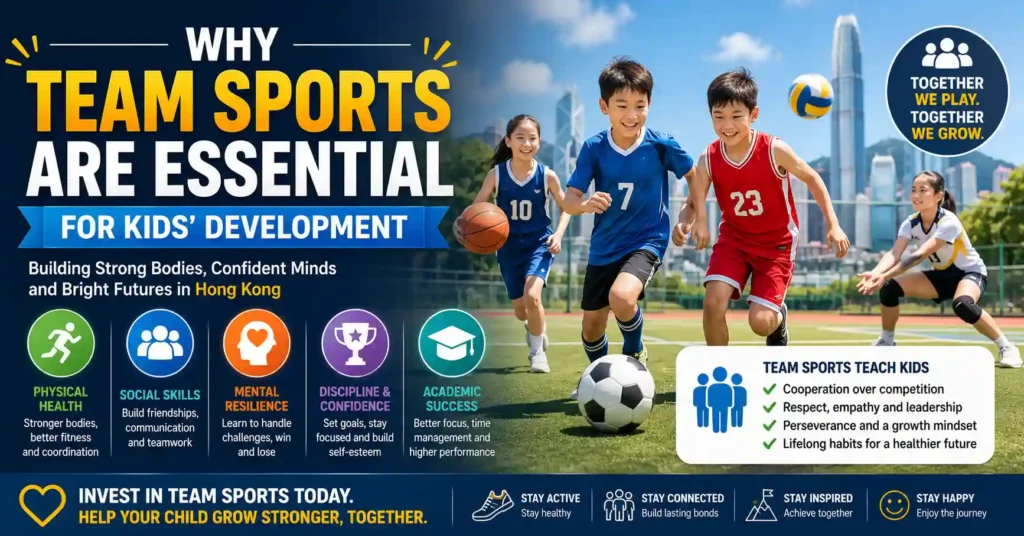
Parents in Hong Kong want their children to grow strong, confident, and socially capable. But between academic pressure and screen time, many kids miss a powerful opportunity: team sports. Research from the Aspen Institute shows that children who play sports for kids score 40% higher on peer cooperation tests than those who don’t. Team activities shape the body, but they also build emotional resilience, leadership skills, and lifelong friendships. This guide explains why team sports matter and how they prepare children for future success.
What Are the Main Benefits of Team Sports for Kids?
Team sports improve children’s physical fitness, social skills, and mental health while teaching cooperation, discipline, and resilience through structured play and shared goals.
Playing with others forces kids to communicate, compromise, and collaborate. A child who learns to pass the ball learns to share opportunities. A child who loses a match learns to handle disappointment. These lessons transfer directly to school, family life, and future careers. The benefits of team sports extend far beyond the playing field.
Physical Health and Fitness Development
Children who join team sports move more. Regular activity strengthens their hearts, builds muscle, and improves coordination. Hong Kong’s sedentary lifestyle makes this urgent. Kids who sit for long hours face obesity, weak bones, and poor posture. Soccer, basketball, and other group activities keep them active and engaged.
Physical benefits include:
- Better cardiovascular health and stamina
- Stronger bones and improved motor skills
- Reduced risk of childhood obesity
- Enhanced balance and coordination
Programs like basketball training for kids offer structured sessions that build fitness while teaching game strategy. Children develop agility and strength without feeling like they’re exercising.
Social Skills and Emotional Intelligence
Team sports force children to work with others. They learn to listen, negotiate, and support teammates. A shy child becomes more confident after scoring a goal. An aggressive child learns self-control after receiving a red card. These experiences shape emotional intelligence in ways classroom lessons cannot.
Kids develop:
- Empathy by understanding teammates’ feelings
- Communication skills through on-field coordination
- Conflict resolution by managing disagreements
- Leadership abilities when taking responsibility
Social learning happens naturally during play. Children observe, imitate, and adjust their behavior based on group feedback. This mirrors real-world social dynamics.
How Do Team Sports Build Mental Resilience in Children?
Team sports teach children to handle failure, manage stress, and persevere through challenges by exposing them to both wins and losses in a supportive environment.
Every game has a winner and a loser. Kids learn that losing doesn’t mean failure—it means trying again. This mindset, called growth mentality, helps them face academic challenges, social conflicts, and personal setbacks. Youth sports development focuses on building this resilience early.
Handling Wins and Losses
Victory teaches kids confidence. Defeat teaches them humility. Both lessons matter. A child who never loses may struggle when facing inevitable failures later. A child who never wins may stop believing in their abilities. Team sports provide balanced exposure to both outcomes.
Coaches and parents should emphasize effort over results. Praising hard work rather than talent encourages persistence. When children see improvement over time, they develop intrinsic motivation.
Managing Pressure and Expectations
Performing in front of others creates healthy stress. Kids learn to stay calm under pressure, focus despite distractions, and recover from mistakes. These skills translate to exams, presentations, and job interviews.
Pro Tip: Encourage your child to focus on controllable actions like practice and teamwork rather than uncontrollable outcomes like winning.
What Role Does Teamwork Play in Child Development?
Teamwork teaches children to trust others, share responsibilities, and achieve goals collectively, fostering cooperation and accountability essential for adult success.
Individual sports build personal discipline. Team sports build collective responsibility. A basketball player must pass to the open teammate. A soccer defender must trust the goalkeeper. These interactions teach kids that success depends on cooperation, not just individual talent.
Children learn to:
- Respect different roles and strengths
- Support teammates during difficult moments
- Celebrate shared achievements
- Accept feedback and adjust behavior
Programs like forest school hong kong combine outdoor team challenges with sports, reinforcing cooperation through nature-based activities.
How Do Team Sports Improve Academic Performance?
Team sports enhance academic performance by improving focus, time management, and discipline while reducing stress and increasing motivation through structured routines and goal-setting.
Students who play sports often perform better in school. Regular physical activity improves concentration and memory. The discipline required for practice transfers to study habits. Kids learn to manage time by balancing homework and training.
Building Time Management Skills
Athletes must organize their schedules. They learn to prioritize tasks, complete assignments efficiently, and avoid procrastination. These skills become lifelong assets. A child who manages training and schoolwork at age ten will manage work and family responsibilities at thirty.
Enhancing Focus and Discipline
Following a coach’s instructions requires attention. Memorizing plays requires focus. Completing drills requires discipline. These mental habits strengthen cognitive control, which improves classroom performance. Studies show student-athletes maintain higher grade averages than non-athletes.
What Are the Long-Term Benefits of Youth Sports Participation?
Youth sports participation leads to healthier lifestyles, stronger social networks, and better career outcomes by instilling habits of discipline, teamwork, and resilience that persist into adulthood.
The importance of sports for children extends decades beyond childhood. Adults who played team sports report higher life satisfaction, better health, and stronger professional networks. They’re more likely to stay active, volunteer, and take leadership roles.
| Long-Term Benefit | Impact |
| Physical Health | Lower rates of chronic disease |
| Social Connections | Stronger friendships and networks |
| Career Success | Higher earnings and leadership roles |
| Mental Well-being | Reduced anxiety and depression |
Children who attend holiday camps for kids often continue sports into adulthood. Early exposure creates lasting interest and enjoyment.
How Can Parents Support Their Child’s Sports Development?
Parents support sports development by encouraging participation, maintaining positive attitudes toward outcomes, and prioritizing enjoyment over performance while providing consistent attendance and resources.
Your role matters. Kids need encouragement, not pressure. Celebrate effort regardless of results. Attend games and practices. Ask about their experiences. Avoid living vicariously through their achievements. Your child plays for themselves, not you.
Practical steps include:
- Choosing age-appropriate sports
- Ensuring proper equipment and safety
- Balancing multiple activities
- Communicating with coaches
Programs like gymnastics for kids hong kong offer structured environments where parents can observe progress and stay involved.
Frequently Asked Questions
What is the best age to start team sports?
Children can start structured team sports around age five or six when they understand basic rules and social dynamics. Younger kids benefit from unstructured play and simple games that build motor skills.
How many sports should a child play?
Experts recommend multi-sport participation until age twelve to develop diverse skills and prevent burnout. Specialization too early increases injury risk and reduces long-term enjoyment.
What if my child doesn’t enjoy competitive sports?
Try recreational leagues, cooperative games, or individual activities with group elements. Not every child thrives in high-pressure environments. The goal is lifelong activity, not professional athletics.
How do team sports help shy children?
Team sports provide structured social interaction where shy children can build confidence gradually. Shared goals create natural conversation topics and reduce social anxiety through repeated exposure.
Can team sports interfere with academic success?
When balanced properly, team sports enhance academic performance by improving focus, time management, and stress relief. Problems arise only when training demands become excessive or unsustainable.
Taking Action for Your Child’s Development
Team sports offer children irreplaceable benefits: physical health, social skills, mental resilience, and lifelong habits. Hong Kong parents face intense academic pressure, but physical activity isn’t optional—it’s essential. Your child deserves opportunities to play, grow, and learn through movement.
Start today. Research local programs. Talk to your child about their interests. Attend a trial session. The skills they gain now will serve them for decades. Team sports don’t just build athletes—they build capable, confident adults ready to face any challenge.